

Blog
The Art of Pipe Making: Craftsmanship You Can Feel in Your Hands

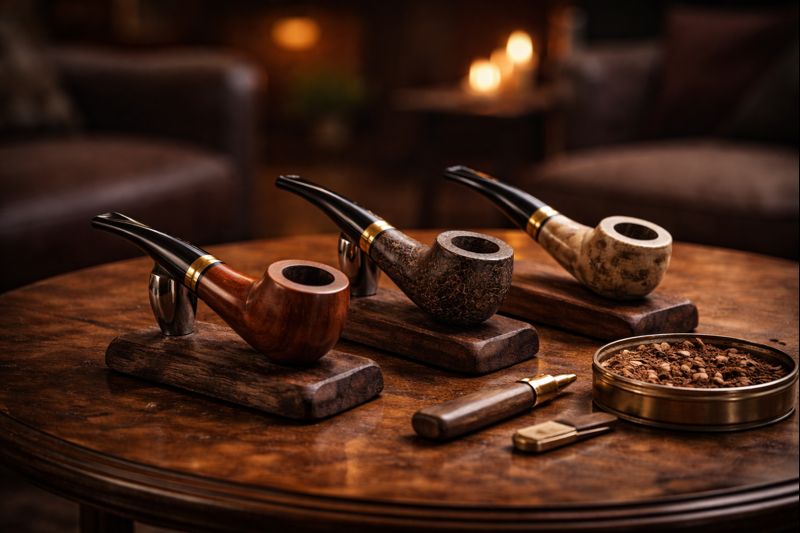
In a world increasingly shaped by speed, automation, and disposable goods, true craftsmanship stands apart. It lives in quiet workshops, in steady hands, and in the patience required to do things the right way. Pipe making is one of those rare crafts where the process matters just as much as the final product.
A handcrafted pipe is not simply made. It is shaped, refined, and earned through time, focus, and experience. And when you hold one, you can feel that difference immediately.
A Tradition Shaped by Time
Pipe making is a craft with deep historical roots. For centuries, pipes were carved by hand using simple tools, guided by skill passed down through observation and practice rather than written instruction. Each pipe reflected the maker’s environment, materials, and personal style.
Despite modern advancements, traditional pipe making has remained remarkably consistent. While contemporary tools may assist in certain stages, the essence of the craft has not changed. It still relies on an understanding of materials, a respect for tradition, and the discipline to work slowly and deliberately.
From Raw Material to Refined Form
Every pipe begins as a solid piece of wood or stone, selected carefully for its grain, strength, and heat resistance. This initial choice plays a critical role in how the pipe will look, feel, and perform.
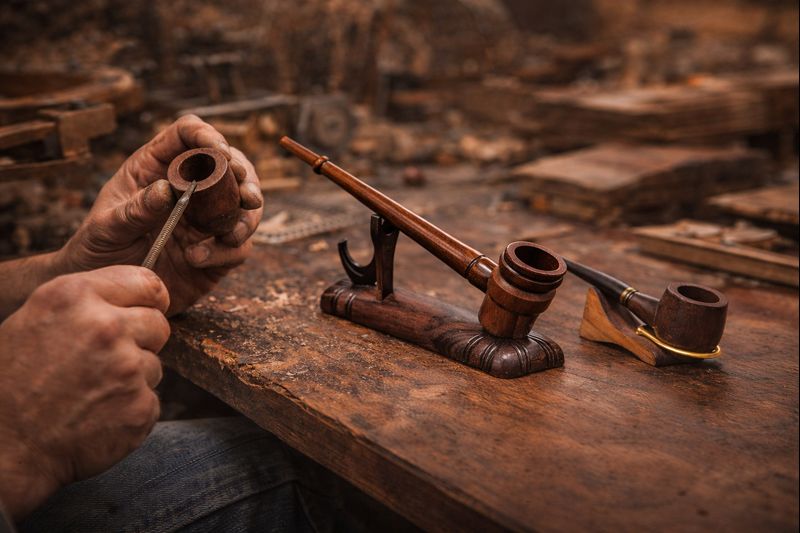
The bowl is carved gradually, hollowed with precision to ensure proper airflow and balance. The stem is shaped to sit comfortably in the hand and mouth, not just to look appealing. Each step requires constant attention, because small adjustments can significantly affect the finished piece.
This is a process that cannot be rushed. The material dictates the pace, and the maker listens.
The Human Element Machines Can’t Replace
What truly separates a handcrafted pipe from a mass-produced one is the human element. Subtle variations in shape, texture, and finish are not flaws — they are signatures of the maker’s hand.
When you hold a handcrafted pipe, you notice its balance. You feel its weight settle naturally in your palm. These sensations come from experience, not automation. No two handmade pipes are ever exactly the same, and that individuality is part of their appeal.
It’s craftsmanship you don’t just see — you feel it.
Why Craftsmanship Still Matters Today
In an era of fast consumption, handcrafted pipes represent a different philosophy. They are made to last, to be used thoughtfully, and to age with character rather than wear out.
Choosing a handcrafted pipe is a conscious decision. It’s a preference for quality over convenience and longevity over trends. For many, a pipe becomes more than an object. It becomes part of daily rituals, quiet moments, and personal reflection.
That connection is something mass production simply cannot replicate.
A Living Craft, Not a Lost One
Pipe making is not a forgotten art. It is very much alive, practiced by makers who respect its history while continuing to refine their skills. Each new pipe carries forward generations of knowledge, shaped by modern hands but grounded in tradition.
Every finished piece is a reminder that some things are worth slowing down for. In a fast-moving world, craftsmanship remains timeless.