


Blog
The Quiet Process Behind a Perfect Pipe

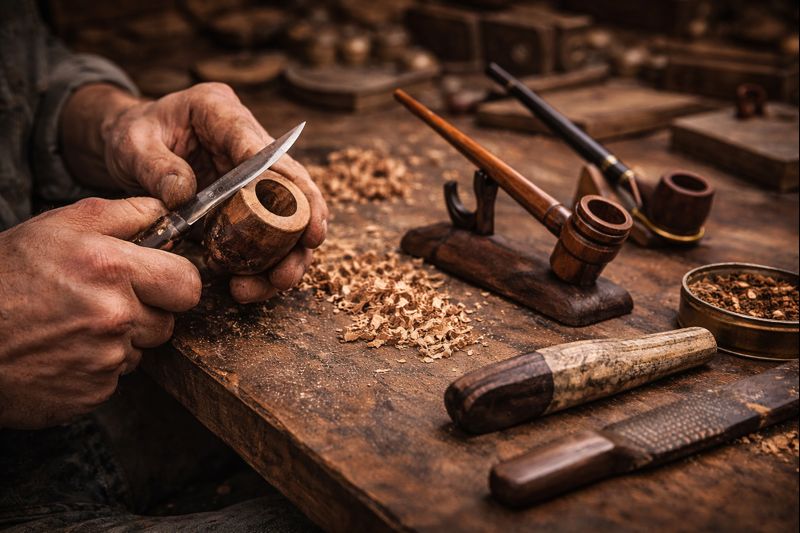
Great craftsmanship is rarely loud. It doesn’t rush for attention or demand recognition. Instead, it reveals itself slowly—in the weight of an object, the balance in the hand, and the subtle confidence that comes from something made with care. Pipe making is a perfect example of this quiet process, where patience and precision matter more than speed.
Behind every well-made pipe is a series of deliberate decisions, guided by experience and respect for the material.
A Workshop Built on Focus
The pipe maker’s workshop is not a place of noise or haste. It’s a space designed for concentration, where tools are chosen carefully and movements are intentional. The workbench tells its own story—worn smooth by years of use, dusted with fine wood shavings, and marked by countless hours of careful shaping.
This environment encourages focus. Each step demands attention, because there is no room for shortcuts when working by hand. The process is as much about discipline as it is about skill.
Starting with the Right Material
A perfect pipe doesn’t begin with carving. It begins with selection. The choice of material determines how the pipe will perform, age, and feel in use. Grain structure, density, and natural imperfections all play a role.
An experienced maker knows how to read the material before the first cut is made. The wood or stone suggests its own possibilities, and the final shape often evolves naturally from what’s already there.
Shaping Takes Time—And Intuition
Carving a pipe is not a mechanical process. It’s a conversation between the maker and the material. The bowl is shaped slowly, hollowed with care to ensure proper airflow and heat distribution. The stem is refined to sit comfortably, balanced so the pipe feels natural in the hand.
These decisions aren’t rushed or automated. They rely on feel, intuition, and years of repetition. Every adjustment is small, but together they define the difference between an average pipe and an exceptional one.
Silence Is Part of the Craft
Much of pipe making happens in silence. There is no need for constant motion or distraction. The quiet allows the maker to notice details—subtle changes in resistance, the sound of a tool against wood, the way light catches the surface as it’s shaped.
This silence is not empty. It’s focused, purposeful, and essential to achieving consistency and quality.
Why the Process Matters
In a world built around efficiency, it’s easy to overlook the value of slow work. But the quiet process behind a perfect pipe is exactly what gives it meaning. Each pipe carries the time invested in it, the decisions made along the way, and the respect shown to the craft.
That’s why handcrafted pipes feel different. They’re not designed to be replaced. They’re meant to be used, appreciated, and kept.
A Finished Piece with a Story
When a pipe leaves the workbench, it carries more than its form. It carries the hours of focused effort, the patience behind every cut, and the quiet commitment to doing things properly.
The result is not just a functional object, but a reflection of a craft that values quality over speed and intention over convenience.